
By: Peter A. Barrett, Interim Head of School (2025-2026)
During the three years between my departure from my headship at St. Patrick’s Episcopal Day School and the start of my interim headship at Green Hedges School, I conducted executive searches—mostly for heads of school but also for senior administrators—at independent schools across the country. At each of those schools, the process looked much like it did last year here at Green Hedges in a highly competitive and successful search that led to the appointment of Kyle Armstrong as the Head of School effective July 1, 2026.
In my searches, conversations with students and families, with Trustees, and with faculty and staff during the data-gathering phase often began with questions like, What is special about this school? and What will the next head of school have to be careful to preserve, regardless of whatever else changes? More often than not, even overwhelmingly so, the answer was likely to be the community . . . the community we have here is really special.
Unsurprisingly, Green Hedges shares that tendency, with parents and faculty and staff likely to identify a strong sense of community and belonging as what is most special. Elaborating, they would say that sense of community both creates and remains animated by the kind of close and warm relationships that become possible in a setting that is small by design, in which individuals recognize that they are known, valued, and respected. One of my favorite responses here, which I shared in my Back-to-School Night remarks, came from a faculty member who noted, referencing the kinds of relationships that exist within the faculty and staff, “It’s nice to be around people who make you better.” The warmth and closeness of the community promote a sense of welcome, support, and collaboration, creating a school setting that strives, among the members of the community, to make each other better.
At other schools, I found neither satisfaction nor illumination in what became the largely predictable response that the particularly special thing about this school or that school was the community. Instead, those responses created a certain restlessness or hunger in me to understand—and I tried to convey that restlessness—just what it was about that particular school community that made it special. What were the ingredients of the community, how did it come into being, how did the school sustain it over time? I was also interested in whether some individuals felt at the margins of the articulated community, or didn’t feel a part of it at all. My intention was not to suggest that a certain school community wasn’t all that special, or that every school thought that its community was special in the same way. Instead, I wanted respondents to share the challenge of discovering, of articulating, what made it so.
As we near the midpoint of my time at Green Hedges, I would like to invite you to consider just what makes this special school . . . well, special . . . and to share, in brief, some of my own observations. Certainly the small-by-design nature of Green Hedges is an essential ingredient. Simply being a small school isn’t, in itself, a destination, of course, but the close, warm relationships and sense of belonging such schools can invite—and, in turn, the deep engagement and learning they can make possible—offer all the makings of a meaningful destination. Young people who feel known, valued, and respected recognize that they can act on their innate sense of curiosity; that they can take risks that may end in failure yet rise to confront another challenge; that wonder itself, often emerging in unexpected ways and at unexpected moments, is always possible.
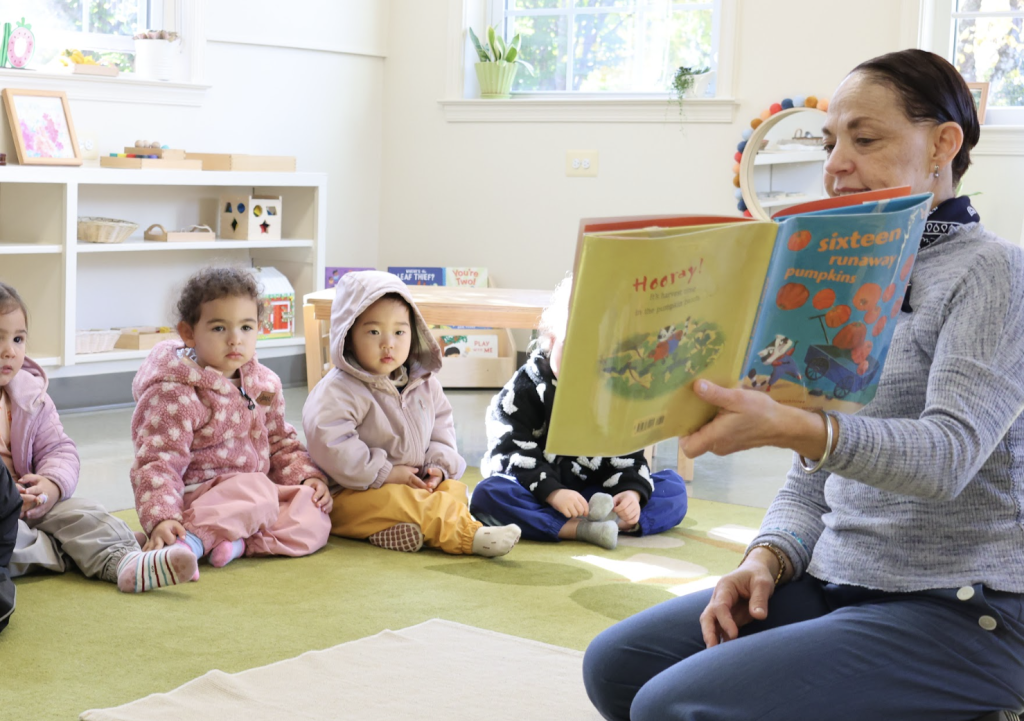
An insightful colleague has observed that each grade-level class becomes a “mini-community” of children and families who explore and learn together, celebrate birthdays and diverse cultural opportunities at school and in each other’s homes, and share in the joy of a class performance. So the work of Green Hedges exists not only in educating young people—it is, after all, a school—but also in building a community of learning, building a culture, in which young learners can thrive, a community that makes that learning and the wonder it elicits possible . . . likely . . . near at hand.
These mini-communities, in turn, comprise a single, larger community, an ongoing process rather than a fixed reality, made possible by the intentionality of such features as the three-year, multi-age Montessori classroom settings; weekly Openings and Closings enjoyed by all, or virtually all, of the school community, offering a variety of content and always an opportunity just to be together; cross-grade-level buddy programming; and even, at more of a remove from an individual child’s daily experience, strong volunteer leadership from the Board of Trustees and the Parent Association.
I’d like to conclude these remarks by lifting up the role that the Green Hedges faculty and staff play in this ongoing process of community- and culture-building. They are indeed a group that strives, as one of them noted, to make each other better, not only their peers but all of us involved in this important enterprise.