
By: Reka Keller, Director of Communications and Marketing
As we enter the month of February and observe Black History Month, we take time to honor the history, culture, and lasting contributions of Black individuals and communities. We also wish to share an important part of the Green Hedges School story, one rooted in our founders’ early commitment to equity and deeply woven into the history of our school and the wider Vienna, Virginia community.
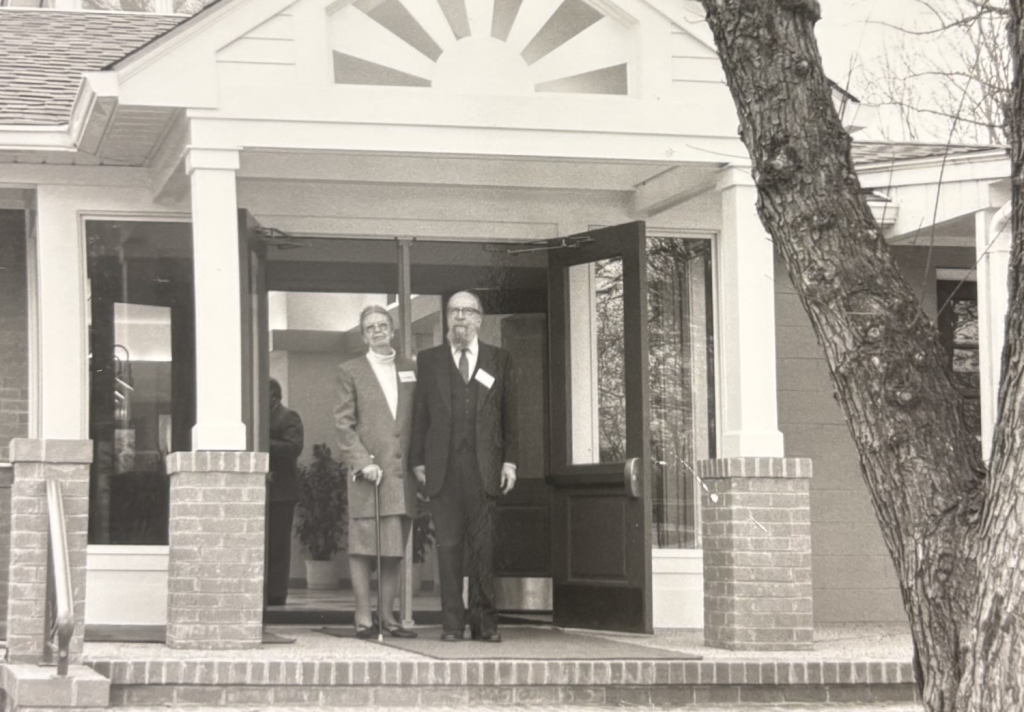
Green Hedges was founded in 1942 by Kenton and Frances Kilmer, who believed that a “one size fits all” approach to education did not serve children well. Furthermore, they believed that traditional public education at the time often lacked a meaningful emphasis on the arts, poetry, and language, and that much of its instruction reflected prevailing attitudes of racial bias and exclusion. The Kilmers envisioned a more thoughtful, inclusive model of education—one that honored each child’s individuality and humanity.
At its founding, Green Hedges operated out of the Kilmers’ house in Arlington, Virginia, until 1955, when the school moved to its permanent home at 415 Windover Avenue. During this period, the nation was grappling with profound questions of equity and access. In 1954, the Supreme Court’s landmark decision in Brown v. Board of Education declared segregation in public schools unconstitutional. While many school systems took years to act on this ruling—Fairfax County did not fully desegregate until 1965–1966—Green Hedges was already prepared to do so. In 1961, four years before countywide desegregation, Green Hedges welcomed its first students of color.
In 1963, when Dr. Martin Luther King Jr. delivered his iconic “I Have a Dream” speech, Kenton Kilmer stood among the crowd, deeply moved and in complete agreement with the vision Dr. King articulated. Green Hedges had already opened its doors to families seeking an education grounded in respect and belonging, regardless of race. Reflecting on this commitment years later, Mr. Kilmer wrote in 1972, “The children [at Green Hedges School] are taught, not merely to accept, but to welcome and appreciate racial and national differences, and to value the artistic and cultural heritage of each ethnic group represented in our cosmopolitan community.”
Kenton and Frances Kilmer’s belief in equity extended beyond the walls of Green Hedges and into the broader Vienna community. Mr. Kilmer helped form the informal, interracial neighbor group “The Friends,” which gathered to discuss desegregation in Vienna. This group later evolved into the Malcolm–Windover Civic Association. His advocacy also led him to serve as Chairman of the Friends of the Library in Vienna, where he played a key role in persuading Fairfax County to open Vienna’s first integrated library—now known as the Patrick Henry Library, recently renamed the Vienna-Carter library, now under re-construction at Center St and Maple Ave.
After his time at Green Hedges, Mr. Kilmer continued his lifelong commitment to equity and social progress through his support of early efforts related to the Family and Medical Leave Act and Universal Pre-K education. Reflecting on this work in 1993, he observed, “We consistently taught, from the beginning, the intrinsic worth of each individual and the value of the varied cultural heritages that make up America.”
As we reflect during Black History Month, we honor the early action and values of the Kilmers and use them as a guide to continue to inform how we approach teaching, learning, and community at Green Hedges today. We reaffirm our commitment to education rooted in equity, dignity, and respect for all.